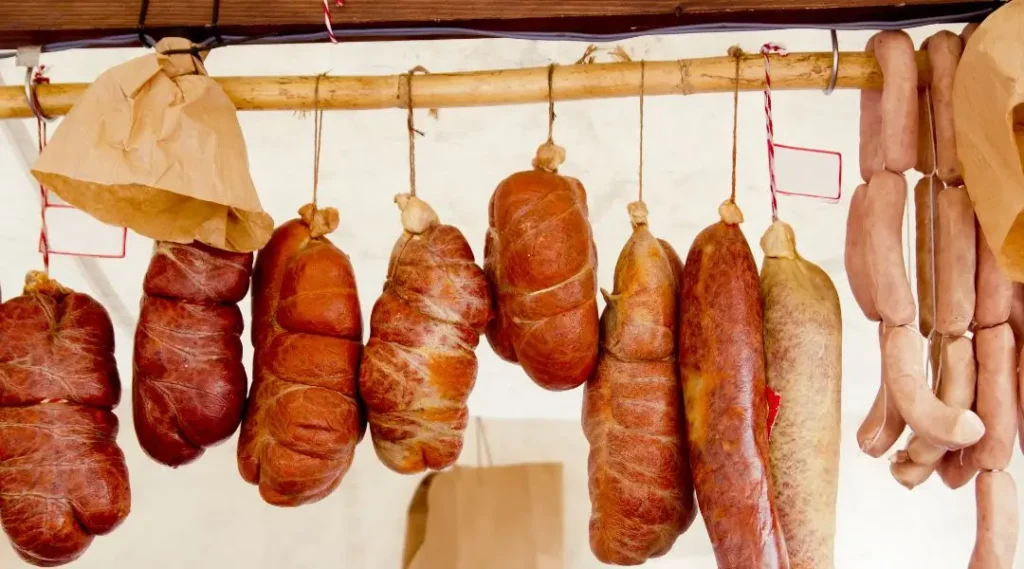
Mallorca is also eaten “cold”. Between pan moreno and tomato, at a village table or by the sea, Mallorcan cured meats tell the island’s story as much as its calas. If you want to hunt them down, here’s a simple guide: first understand what each piece is, then where to taste and buy without getting lost, and finally how to organise it by car so everything feels easy.
Right after you land, the easiest move is to start well: head to the Parking G meeting point, hop on the courtesy minibus and in five minutes you’re leaving the airport with the car ready. Travelling with no excess and no deposits, unlimited mileage, full-to-full fuel and free additional drivers keeps your head on what matters: choosing sobrasadas, camaiots and botifarrons. If plans change, free cancellation 24 h has your back and you keep moving at your pace.
Mallorca sobrasada (PGI): history, types and how to enjoy it
Sobrasada is the ambassador. We’re talking about a PGI (Protected Geographical Indication) with a defined recipe and, within it, a gem: Mallorca Sobrasada made from Porc Negre, using the island’s native black pig. Formats and curing time vary, so you’ll see thinner pieces and huge ones, each with its own personality.
For everyday use, a medium arrissada is grateful: it spreads well and keeps nicely in a cool pantry. If you want a treat, look for a bufeta (large piece, slow curing) for a deeper flavour. Culana and llonganissa are a good bridge for beginners: manageable size and rounded taste. How to eat it is simple: on bread, with a drizzle of honey if you like contrast, or “rotja i calenta” in a pa amb oli that practically demands seconds.
Beyond sobrasada: camaiot, botifarró, llonganissa, culana, bufeta and bisbe
Camaiot is bold and honest. It’s made with a mix of meats and spices; slice it and eat it cold with bread and pickles. Botifarró is a different story: it’s meant to be cooked or grilled; on the griddle with a crisp edge it’s pure Sunday happiness. Mallorcan llonganissa (not the mainland one) sits closer to sobrasada in texture and spices, but in a narrower format. Culana and bufeta are, beyond the lovely names, different shapes and curing times that change the experience. And if you spot bisbe at a traditional table, say yes: it belongs to that family of preparations that still smell like a big celebration.
You don’t need to memorise it all; just match each piece to the moment: spreadable for breakfasts and snacks, sliced for anytime grazing, and grilled for meals that ask for bread, laughter and a long table.
Where to taste and buy: markets, deli shops and small producers
My advice is taste first, buy later. Start at an indoor market on any morning — Sineu, Inca or Santa Maria are safe bets midweek — and find the stall that slices thin and explains best; two questions will teach you more than ten labels. If you have time, visit a small producer: you’ll see how they treat curing and understand why each piece has its season. In Palma, neighbourhood deli shops are still temples where they let you taste before you decide; ask for Porc Negre sobrasada and house camaiot and they’ll steer you right.
Doing it by car has a nice trick: park early, load up calmly, then eat your haul in a Pla village or on a quiet beach. With unlimited mileage you can link market, producer and snack stop without watching the odometer; with full-to-full fuel you keep the budget under control.
Half-day car route: Pla market + producer stop + a village snack
Here’s an easy, tasty half-day plan. You land, pick up the car fast and point towards the Pla de Mallorca. First stop: a market — buy pan moreno, tomato, olives, a piece of camaiot and a medium arrissada. Second stop: a producer on the way to choose a culana or a bufeta you’re excited to take home. Third stop: a quiet village with a sunny bench; build a proper pa amb oli and try everything without rushing. If you’re with friends, additional drivers let you rotate so everyone gets to taste (the driver: water and bread, then swap). A gentle drive back on secondary roads and that feeling of “we did a lot without sprinting”.
How to store and travel with cured meat (trunk, heat, flying)
A traveller’s “ideal pantry” is simple: shade, ventilation and common sense. In the trunk, avoid direct sun and don’t crush the pieces; a basic insulated bag and a couple of airtight containers for opened portions make a big difference. If you’re flying, check the airport rules: cured meats usually travel fine in checked luggage; in the cabin, better whole pieces well protected and no liquids. At home, take the sobrasada out a bit earlier so it spreads nicely, and keep camaiot in the coolest part of your fridge.
FAQs
PGI or PDO? In Mallorca we’re talking about the PGI “Sobrassada de Mallorca”; within it, the Porc Negre variety.
What should I buy for a first try? A medium arrissada to spread + a piece of camaiot to slice: you’ll understand two worlds.
Can you eat botifarró raw? No: it’s best griddled or grilled.
Will it spoil in the car? Not if you avoid direct sun and heat. In summer, add an insulated bag and you’re set.
Can I do this on my arrival morning? Yes: express pickup, early market, nearby producer and lunch in an inland village; smooth and stress-free.
Discover Mallorcan food with AutosMallorca
Planning a Mallorcan cured meat route? Book your car and, right after landing, you’ll be on the road in five minutes towards your first market. Full cover with no excess, no holds or deposits, unlimited mileage, full-to-full fuel and free additional drivers so you can buy calmly and move at your pace. If plans change, free cancellation 24 h. We’ll meet you where flavour begins.