A week in Mallorca goes a long way if you organize the island well. My idea is that each day has a focus — south, Tramuntana, north, east, Palma — and that you spend less time on the road than at viewpoints or in the water. As soon as you land, we make it easy: you go to the Parking G meeting point, hop on the courtesy minibus, and in five minutes you’re starting the engine. Traveling with no excess and no deposits, plus unlimited mileage, full-to-full fuel, free additional drivers, and free cancellation up to 24 h, gives you the freedom to adjust on the fly: if a cove is packed, you switch to plan B without breaking a sweat.
How to plan the week: a good base, logical order, and timing
Mallorca works brilliantly with a comfortable base (Palma or nearby inland) and day trips in blocks. Mornings are for coves and coastline (high light, gentle breeze, better parking if you start early), and afternoons for villages and viewpoints. Use the MA-19/MA-20 to skirt Palma and the MA-10 when you head into Tramuntana: drive calmly, enjoy the curves, and park on the outskirts so you can explore old towns on foot. If you’re traveling with family or friends, extra drivers help you share longer days. And with full-to-full, you control costs and avoid surprises at drop-off.
Days 1–2: The South and Palma (Caló des Moro, Es Trenc, La Seu & Bellver)
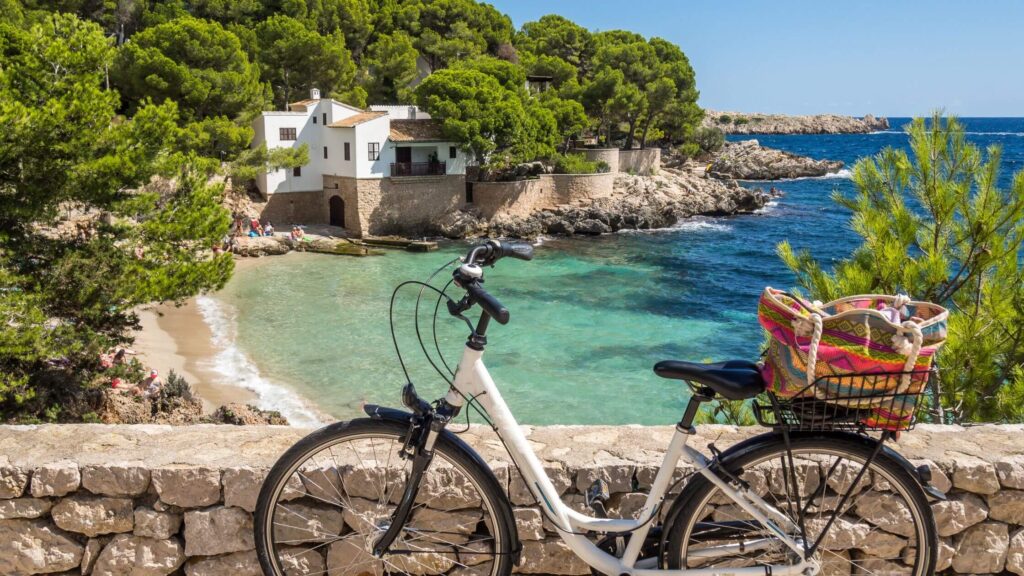
Start in the south for your first taste of the Mediterranean: Caló des Moro and Cala s’Almunia reward early arrivals — that turquoise water makes the final walk worth it. For something wider and more family-friendly, Es Trenc is the plan: endless sand with salt flats in the background. After your swim, take a short drive inland for lunch in a quiet village and, once the heat drops, head into Palma: the Cathedral (La Seu) welcomes you with golden stone, and the Bellver Castle, circular and elevated, gives you a bird’s-eye view of the bay. If you prefer to split it, keep Palma for a full afternoon: museum, a coffee in Santa Catalina, and the seafront at sunset. This is where you feel the advantage: stepping out of the airport and, in a blink, already ticking off your first plan.
Days 3–4: Essential Tramuntana (Valldemossa, Deià, Sóller, Sa Calobra)
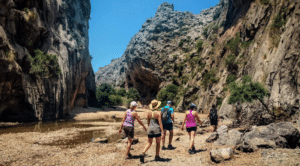
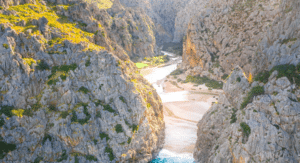
The Serra de Tramuntana isn’t something you “see” — it’s something you experience slowly. Valldemossa in the morning, Deià to get lost in its lanes, and Sóller for an ice cream in front of trams and orange trees. The MA-10 is a continuous postcard: use engine braking, stop at viewpoints, and walk through historic centres. If Sa Calobra is on your list, leave plenty of time: the road is a show of curves and it deserves a calm pace. Staying inland and moving by car lets you fine-tune: one extra viewpoint if the sky opens up, a rocky cove at dusk if the sea is flat. With unlimited mileage, you don’t watch the odometer — you watch the horizon.
Day 5: Panoramic North (Alcúdia, Pollensa, Formentor)
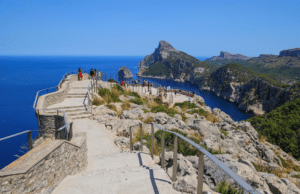
Time for the north. Walled Alcúdia is perfect for the morning: park nearby and wander through arcades and squares. Just down the road, Pollensa keeps that lived-in village feel, with its steps and cafés that make you sit down. Save the afternoon for Formentor: a narrow road, dramatic viewpoints, and golden light if you reach the end of the day. In summer, play with timing (regulated access, quotas, capacity) and aim for long sunsets; in other seasons it’s simpler, but the magic is the same. This is where you’ll appreciate keeping things easy: no card blocks when you book on the go, and extra drivers to share the return.
Day 6: Cultural East (Drach Caves, Capdepera, Artà)
The east blends stone, history, and caves. The Drach Caves are a classic for a reason: music, stalactites, and an underground lake that leaves you quiet. If you want something calmer, the Artà Caves are a beautiful alternative with sea views. Round out the day with Capdepera and its castle watching over the rooftops, and Artà, which has exactly the pace you want in the late afternoon. Drives are easy; with full-to-full and 24-hour cancellation, if it rains you simply swap the order: culture in the morning, coast at sunset when it clears.
Day 7: A tailor-made extra (Cabrera, wineries, or markets)
Your last day is a wildcard, depending on how the week has gone. If you’re tempted by Cabrera National Park, start early and plan the boat trip: pure, protected nature. If you prefer inland, a winery in Binissalem or Pla i Llevant is a perfect finish, with tastings and a stroll between vines. Want something more local? An inland market (Sineu, Inca, Santa Maria…) and a slow lunch. The best thing about moving at your own pace is you’re not locked into one plan: if the wind picks up, you pivot to villages; if the sea is calm, you gift the week one last quiet cove. No fine print, no rushing.
Getting around easily: real timings, parking, and roads
From the airport, expect 35–45 min to the Pla (inland), about an hour to the east, and roughly 40–60 min to the Tramuntana, which depends more on viewpoints than on kilometres. The MA-19 and MA-20 give you quick exits; the MA-10 asks for patience and rewards you with views. In towns, use outskirt car parks and walk; for popular coves, start early and always keep a plan B a few minutes away. Express pick-up saves your first travel bottleneck; no excess and no deposits keeps your card free for restaurants and tickets; and with unlimited miles plus extra drivers, the car stops being a problem and becomes your best ally.
Enjoy Mallorca with AutosMallorca
Ready for your week in Mallorca? Book your car and, as soon as you land, you’ll be driving to your first cove in five minutes. Full cover with no excess, no blocks and no deposits, unlimited mileage, full-to-full fuel, and free additional drivers so you travel at your own pace. If plans change, free cancellation up to 24 h. We’ll be waiting where the route begins.